How Mobile App Development is Shaping the Future of Healthcare (2026 Guide)
Mobile applications have become one of the innovative sources for selling services to customers. Since the pandemic, the demand for mobile apps in healthcare has risen to a massive extent as people are considering online health consultations rather than visiting doctors in person. Another cause of demand for mobile app development in healthcare is that many doctors are unable to manage the waiting list of patients. So it provides convenience to doctors and patients to manage the timeline and schedule it through video calls. Earlier, the manual process was quite hectic to reach a large audience, so many industries took a big step by switching their services to online portals. Similarly, the medical sector also underwent a huge revolution by introducing new techniques of consulting patients through custom Mobile App Development platforms.
Nowadays, the complex task of monitoring patients 24/7 has become easy with the integration of various devices with the healthcare mobile app. Moreover, understand how doctors can earn lots of revenue by developing a custom application of their choice. So, let’s delve into the future of healthcare and find out how mobile apps are changing the experience of users.
Background: The Evolution of Healthcare Access
Access to healthcare has changed dramatically over the decades. Early medical practice relied entirely on in-person visits, leaving patients in remote areas underserved. The rise of telecommunications in the 20th century gave birth to telemedicine, starting with simple phone consultations and evolving into video conferencing, electronic health records (EHRs), and secure messaging. Today, mobile app development has taken this evolution a step further, putting a full healthcare experience directly in patients’ pockets.
Demand for Telemedicine
The demand for telemedicine has emerged due to several factors:
1. Accessibility Issues
It is common knowledge that rural and other vulnerable communities lack proper healthcare facilities, hence a challenge in accessing such specialized medical care. These gaps are closed by telemedicine through consulting and follow-up care, making healthcare more accessible with the help of medical app development firms.
2. Convenience
Consumers have been looking for easy ways to access medical care in their homes more and more. Telemedicine eliminates or reduces travel and physical visits, thus enabling patients to receive the care they need without much interruption.
3. Cost-Efficiency
Services through a telemedicine platform make a positive impact on overall costs by significantly sparing physical amenities as well as ADM systems. This proved to have a significant cost-saving advantage and was therefore preferred by both the patients as well as the healthcare providers.
4. Chronic Disease Management
Different chronic diseases mainly require checkups or follow-ups, which patients frequently access. Telemedicine is also useful in maintenance, whilst the patient does not have to attend the clinic regularly for follow-up consultations.
5. Time-Saving
Leveraging telemedicine helps both the patient and the healthcare service providers or doctors save time. Because it is done online, it also reduces the time and distance likely to be spent on travelling and waiting at clinics for consultation.
6. Increased Access to Specialists
As for the last factor, it should be noted that patients who live in distant zones or rural areas have limited access to qualified medical help. It allows them to access specialists who are not based locally. It increases the reach of expertise received and the general quality of care.
7. Patient Preferences
It is one of the reasons most patients prefer remote consultations through electronic/telemedicine. That is why the growth of interest in digital health solutions is one of the key factors driving the growth of adoption and demand for telemedicine services.
Benefits of Developing Healthcare Mobile Applications
The growing demand for healthcare apps arises from the convenience and accessibility they offer to patients and providers alike. Here are the key benefits of developing healthcare applications:
Comfort and Convenience
Patients can use healthcare apps to receive services at home. Individuals in distant places can experience difficulties when it comes to seeking professional healthcare because of the long travel distances. Patients use these apps to reach medical professionals easily.
Increased Patient Engagement and Satisfaction
Applications in healthcare elevate patient participation by including elements such as reminder services and timely exchanges with healthcare professionals. According to Gozio Health, 92% of patients feel more connected to their hospital and take better care of themselves because of the digital patient education they receive through mobile platforms. A lot of medical centres use AI processes to give fast replies to patient inquiries while increasing satisfaction.
Reduction of Administrative Work
Healthcare app development services reduce the administrative burden on medical professionals, allowing them to track essential information easily. This enables providers to treat multiple patients simultaneously, as tasks like appointment scheduling and patient data management can be handled through mobile health (mHealth) apps.
Cost Reduction and Streamlined Processes
Healthcare apps provide patients with the opportunity to access medical services without needing hospital admissions. This streamlines medical processes, requiring only an internet connection for access. The cost-effectiveness of these apps comes from better resource allocation and patient management, allowing for significant savings on travel expenses and paperwork.
Enhanced Communication Between Patients and Providers
New health services give patients the ability to reach their doctors at once with messaging and video features. Such a sustained relationship strengthens the ties between doctors and patients and ensures patients obtain the essential care speedily. During the app development stage, it is necessary to uphold HIPAA standards to protect patient information and comply with industry standards.
Improved Data Collection and Insights
In gathering rich insights into patient behavior and health experiences, healthcare mobile app development is essential. Medical institutions utilize this data to discover trends and forecast what patients may need in treatment plans that are specific to them. Insights can enable doctors to offer personal care and enable developers to update app capabilities by utilizing user interactions and behaviors.
Looking to build a healthcare mobile app for your practice or clinic?
Book a free consultation with our experts to discuss your requirements and explore the right telemedicine solution for your needs.
Schedule a Free ConsultationHow Mobile Apps Enhanced the Doctors’ and Patients’ Experience
For Doctors:
1. Streamlined Patient Management
Mobile apps help doctors manage appointments, records, and treatment plans efficiently. It reduces paperwork and improves workflow.
2. Real-Time Data Access
Doctors can access real-time patient data through apps. It helps them make timely and informed decisions.
3. Enhanced Communication
Apps offer secure messaging and video calls. Doctors can consult with patients quickly without needing in-person visits.
4. Easy Documentation
Apps often include tools for documenting patient interactions. It simplifies record-keeping and helps with regulatory compliance.
5. Fewer No-Shows
Automated reminders and notifications reduce patient no-shows. It makes better use of doctors’ time and resources.
For Patients:
1. Easy Appointment Scheduling
Patients can book, reschedule, or cancel appointments from their phones. It offers greater flexibility and less waiting time.
2. Access to Health Records
The mobile application gives patients secure access to their records, test results, and treatment plans. It keeps them informed and engaged.
3. Virtual Consultations
Patients can have video calls or messaging consultations with their doctors. This makes getting medical advice more convenient.
4. Personalized Health Management
Apps help patients track symptoms, set medication reminders, and monitor health metrics. This aids in managing chronic conditions and overall wellness.
5. Improved Health Literacy
Many apps provide educational resources and interactive features. These help patients understand their conditions and make informed choices.
Latest Mobile App Development Trends in Healthcare (2026)
Healthcare mobile app development is evolving fast. Here are the trends shaping the industry in 2026:
1. AI-Powered Symptom Checkers
AI algorithms now help patients assess symptoms before a consultation, giving doctors a head start on diagnosis and reducing appointment time.
2. Wearable Device Integration
Apps that sync with smartwatches and fitness trackers allow continuous monitoring of heart rate, glucose levels, and activity — feeding real-time data directly to care providers.
3. Remote Patient Monitoring (RPM)
RPM-enabled apps let doctors track chronic disease patients from a distance, flagging abnormal readings automatically and reducing hospital readmissions.
4. Voice-Enabled EHR Entry
Voice recognition tools are cutting down documentation time for doctors, allowing hands-free entry of patient notes directly into EHR systems.
5. HIPAA-Compliant Cloud Infrastructure
As data privacy regulations tighten, healthcare apps in 2026 are built on secure, HIPAA-compliant cloud platforms that support scalability without compromising compliance.
The global mHealth app market is projected to surpass $86 billion by 2030, driven by rising demand for chronic disease management, remote monitoring, and virtual care tools. These trends are pushing healthcare mobile app development firms like VCDoctor to build smarter, more connected, and more secure platforms for both patients and providers.
How to Approach a Healthcare Mobile App Development Company
When you approach a healthcare mobile app development company, you want to ensure they meet your needs and deliver a top-quality product. Here’s how to make an informed choice:
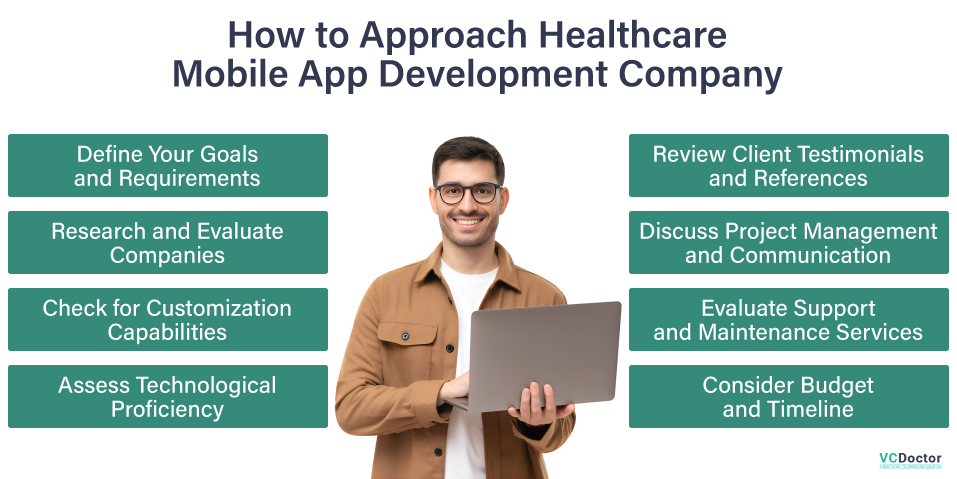
Define Your Goals and Requirements
Start by clearly defining what you want the app to achieve. What problems are you trying to solve? List the features you need, like patient scheduling, secure messaging, or integration with wearables. A clear vision helps the company understand your needs better.
Research and Evaluate Companies
Look for the experience of the healthcare app development company. Check their portfolios to see their past work. Make sure they know healthcare regulations and standards, such as HIPAA or GDPR. A strong track record in healthcare is crucial.
Check for Customization Capabilities
Ensure the company can customize the app to your specific needs and that they have a highly trained mobile app developer. Generic solutions may not fit all your requirements. Look for a developer who offers tailored solutions and can adapt their technology to match your goals.
Assess Technological Proficiency
Verify that the company is skilled with the latest technologies. This includes mobile platforms like iOS and Android, cloud services, and security measures. Make sure they stay updated with industry trends and can include advanced features in your app.
Review Client Testimonials and References
Ask for testimonials and references from past clients. Talk to them about their experiences with the company. Focus on project management, communication, and post-launch support.
Discuss Project Management and Communication
Effective project management and clear communication are key. Ensure the healthcare application development company follows a good process for managing projects and will keep you updated regularly. Discuss how they handle feedback and changes during development.
Evaluate Support and Maintenance Services
Post-launch support is crucial for a smooth-running app. Ask about the company’s support services, including bug fixes, updates, and technical help. They should offer ongoing support to address any issues after launch.
Consider Budget and Timeline
Discuss your budget and timeline early on. Make sure the company can complete the project within your budget and timeframe. Be transparent about additional costs and how they handle changes in project scope.
Ready to Build Your Healthcare Mobile App?
Connect with our team to discuss your project scope, see a live demo, and take the next step toward delivering better, more connected care.
Contact Us TodayConclusion
Mobile apps are revolutionizing telemedicine in many ways. They enhance accessibility, making healthcare more reachable for everyone. They also boost efficiency, streamlining processes for both patients and doctors. With Mobile App Development, the quality of care improves through better communication and real-time data access. As technology continues to advance, mobile apps will become even more crucial in shaping the future of telemedicine. They will help overcome current challenges and lead to a more connected and responsive healthcare system.
FAQs
Mobile apps offer convenience, enhanced communication, integrated health monitoring, personalized care, and efficient administrative tasks, all of which contribute to a better telemedicine experience.
Apps enable real-time communication through secure messaging and video calls, allowing for timely and effective consultations and follow-ups.
Consider the company’s expertise, experience, customization capabilities, technological proficiency, and support services when making your choice.
The demand for telemedicine has increased due to accessibility issues, convenience, cost-efficiency, chronic disease management needs, and the impact of the COVID-19 pandemic.
Mobile apps facilitate continuous monitoring, personalized health management, and regular communication with healthcare providers, which is crucial for effective chronic disease management.
Costs vary based on features, compliance requirements, and platform (iOS/Android), typically ranging from $20,000 for a basic app to $150,000+ for a fully custom, HIPAA-compliant platform with EHR integration.
HIPAA compliance requires end-to-end encryption, secure user authentication, audit logs, signed Business Associate Agreements (BAAs) with vendors, and regular security risk assessments throughout development.
Common stacks include React Native or Flutter for cross-platform apps, Node.js or Django for backend, and AWS or Google Cloud (HIPAA-eligible services) for secure, scalable infrastructure.
A basic MVP typically takes 3-4 months, while a fully-featured, HIPAA-compliant app with EHR integration and telemedicine features can take 6-9 months.